Cape Cod and Powelton

Feature Interview
Tyler Rae’s Conversation with Mark Chalfant
During the coming year we will conduct interviews with golf architects, greens keepers and historians who have made significant contributions to the game. I have been fortunate to study dozens of new builds and Golden Age restorations over the past three decades. In recent years some of the finest projects are, Lookout Mountain, Spy Ring, Old Barnwell, North Jersey, William Langford’s Wakonda and a sporty Ross gem in Connecticut known as Wampanoag. Tyler Rae has been deeply involved with many of these projects. Our February 2024 interview will discuss Tylers’s evolution as a golf course architect.
MC. Good Morning Tyler. How did you become interested in becoming a golf course architect?
Tyler. It was early on when I began playing junior golf tournaments around the Mid-Atlantic states. We were fortunate to play Merion, Huntingdon Valley, Lancaster, Aronimink, Wilmington along with the Country Club of Scranton which was created by Walter Travis.

Lancaster 14th (Flynn)
Those courses opened my eyes and I adored how every golf course was completely different from hole one to hole eighteen.

Wakonda 6th Green was pestered by encroaching Evergreen Trees (1993)
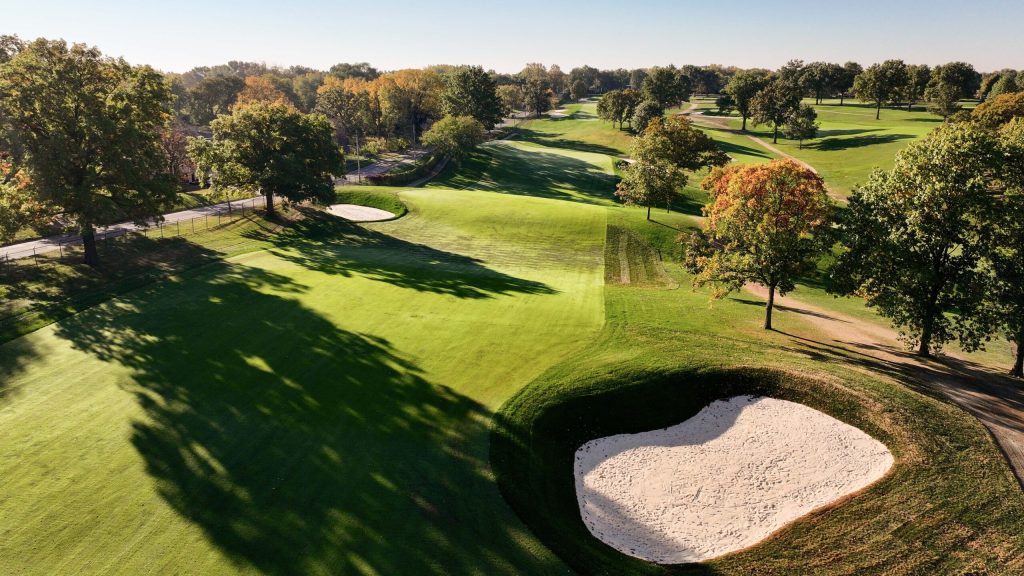
Restored Wakonda 6th Fairway towards the Skyline Green (2023)

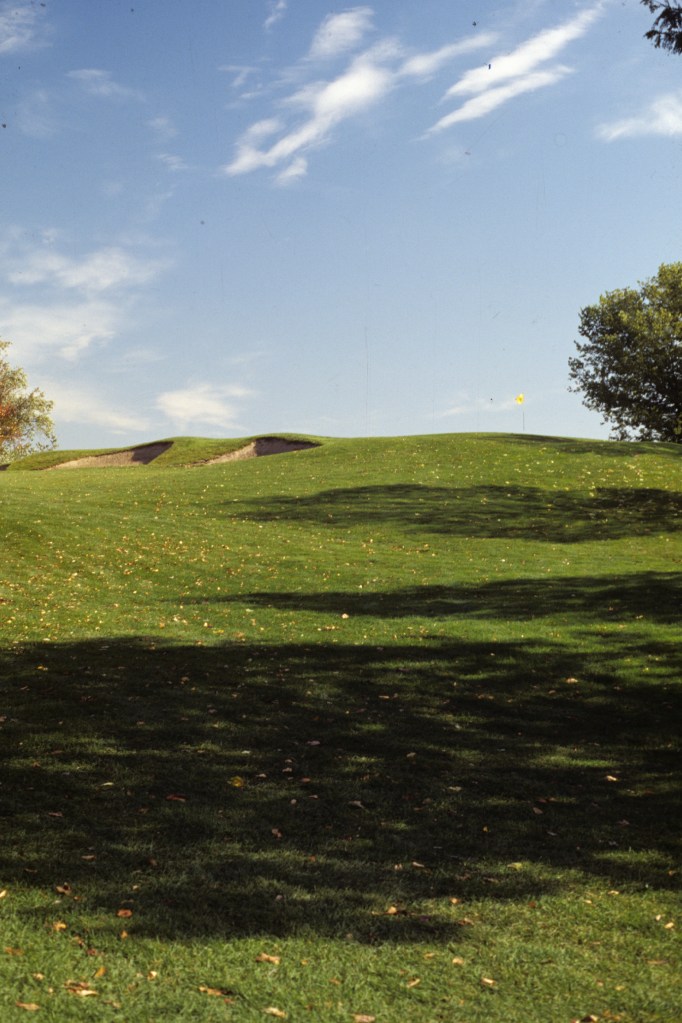
Franklin Hills 13, Volcano
Each of these layouts had their own identity and scale, with varied bunker and green styles. I was captivated early on. My father shared this passion for the game and we sought out everything we could. During that time my father owned a company called “Golf Holidays.” So we would go play in Florida and throughout the Southeast in the winter. Then in summer we would work our way up north along the eastern seaboard. I also had the opportunity to join my dad on some overseas golf pilgrimages to memorable golf courses.
A few courses that made an early and lasting impression on me were: Merion, Aronimink and Huntingdon Valley. Merion was unforgettable because while playing there the history is oozing out of everything that you encounter. Aronimink felt big and grand. This was the first time I felt an immense scale of place. It just felt big, long and difficult! William Flynn’s routing at Huntingdon Valley is excellent. He draped eighteen holes over a beautiful valley setting that all worked seamlessly and consistently. I loved the angles and how Flynn used the land to feed balls onto greens and funnel shots to specific hole locations. I knew that is how golf was meant to be played.

Merion 8th: A Terrifying Pitch Shot
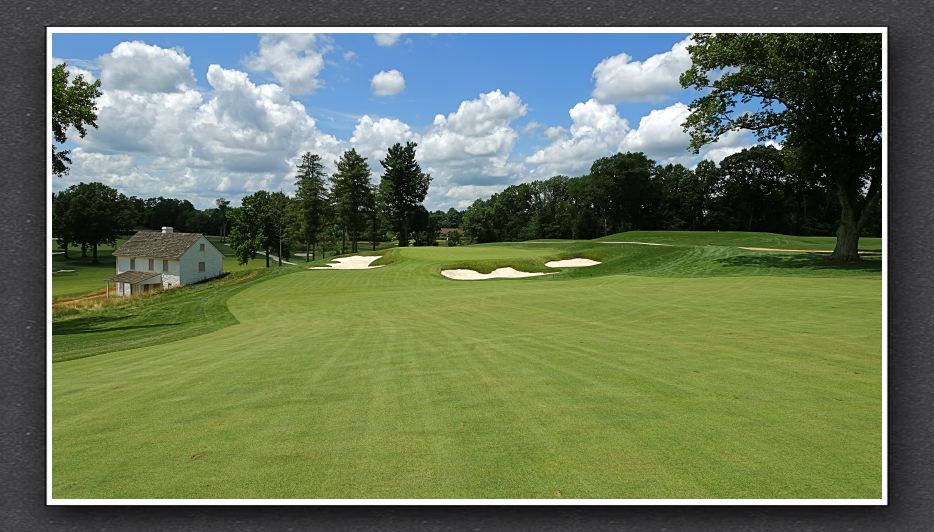
Aronimink’s 7th: Short Approach Demands Precision

Huntingdon Valley’s Long and Slanting 7th

Harrison Hills 16th
MC. Please tell us about some professors, agronomists, or golf architects that were important mentors to you.
Tyler. Many professors scoffed at the idea of hanging out my own shingle as “A Golf Architect.” They pushed me more to be a “Landscape Architect” and not pigeon-hole my career. It was tough convincing them that there was a profession to be made out of being a Golf Architect. Regarding agronomists the most influential for me would be Steve McDonald who is a Turfgrass Professor at Rutgers University. Every single time that I have spoken to him since meeting him many years ago, I have learned something very meaningful about how to marry the two essential items. These are golf course architecture and growing turf. Steve is always way ahead of the curve. Also, I believe we think very similarly. In my opinion Steve is the leader of the pack in the turf world.
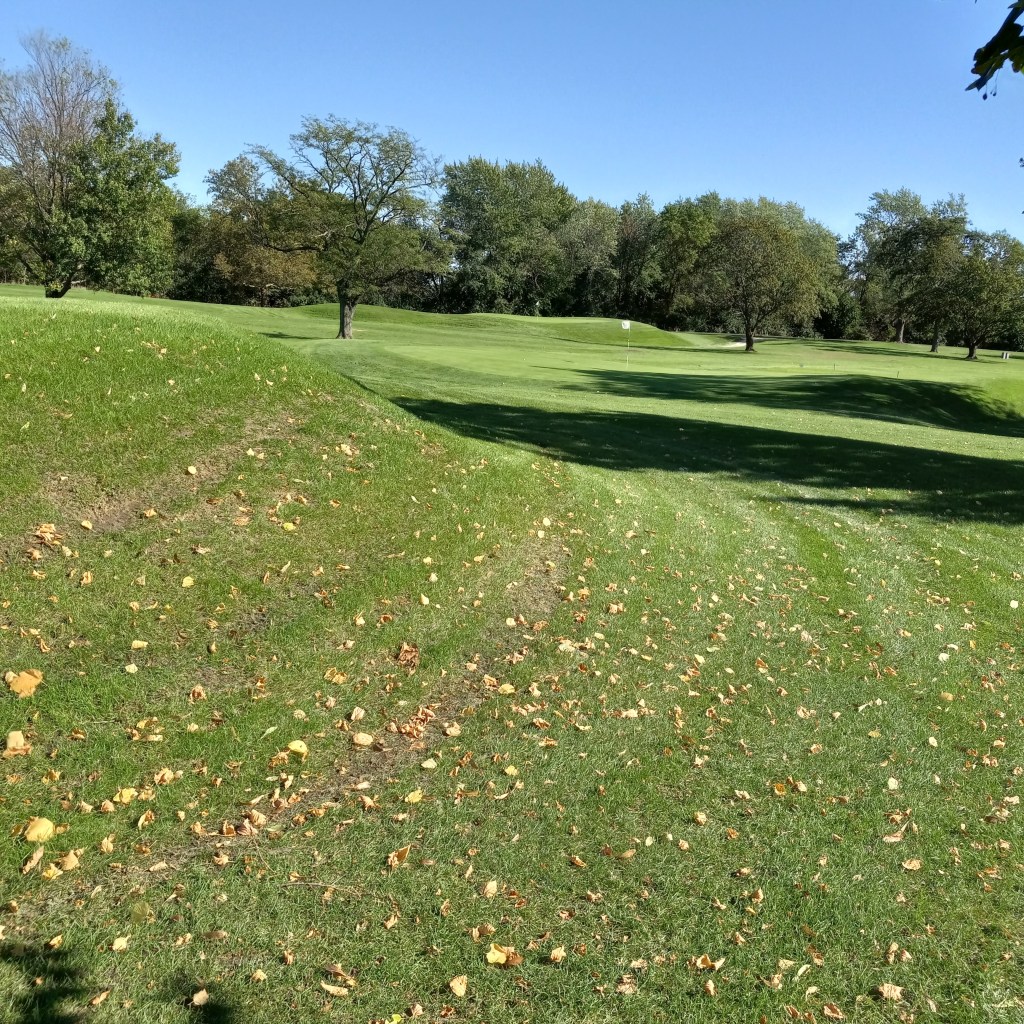
Kankakee Elks (1930) 17th Green and 12 in the background
For me Prichard and Foster are the two living architects that have molded my ethos in the realm of architecture. Keith Foster really opened my eyes to the business side of things and how firms could flourish. He showed me the details of creating master plans, as well as how to research old aerials, drawings and periodicals. He advised me about the importance of prudent decision making based on the documents on hand. In addition to that he taught me how to transform a property through both proper tree management practices and bold native grassing techniques. Similar to Keith, Ron Prichard was transformational and a game changer for me because he was a true artist and marched to the beat of his own drum. Ron was very patient with me and helped me grow as a shaper and an architect. Ron also taught me what features to look for in Golden Age golf courses. Ron emphasized how thoughtful classic architects were a century ago because moving dirt and terrain back then was so arduous. One of my favorite quotes from Ron was:
“Tyler, these Golden Age architects and their construction teams never moved a teaspoon of dirt more than necessary when building tees, greens, or bunkers. So don’t muddy this up when given the opportunity! Be thoughtful and think long and hard before moving too much dirt!”
This means that often times our predecessors fit holes into existing landforms and utilized specific features of this land because that was the only way they could make the golf hole work well. They did not have the option of bulldozing hillsides with massive dozers. Ron cautioned me that being heavy handed is wrong. In sum care and restraint is the best path. Wise words indeed!
Donald Ross Expertise

Wampanoag 4th, 8th on left
Tyler, I admire the tremendous amount of time you have spent in studying the work of Donald Ross. Which of his golf courses do you consider to have the most varied set of greens?
Mark, these are the best collections of original greens by Ross:
French Lick, Aronimink, Mountain Ridge, Brae Burn, and Manchester ( New Hampshire). In upstate and western New York Glens Falls, Thendara, Teugega and the Country Club of Buffalo are all worth a special trip.
In the Midwest Barton Hills,Grosse Ile, Oakland Hills and Brookside(Canton) are superb.
MC. For someone who is just entering the architecture field which Donald Ross routings would you suggest that they make a pilgrimage to study?
Tyler. The ones mentioned above are the most important. Studying the courses least touched to view what Ross and his associates and construction crews built themselves is very worthwhile. Then you can form your own opinion on Ross and his style. On the other hand, seeing recent restorations or renovations of Ross means that you are viewing what some other architect’s interpretations are of Donald Ross are. That is not very beneficial!
Off the Beaten Path
MC. I am a big fan of St. Louis Country Club, Wykagyl, Kankakee Elks, and Cincinnati’s Hyde Park. What are some of the distinguishing features/holes of these and other American golf courses further afield that merit careful study?
Tyler: Here are some memorable par fours…
Franklin Hills#13 Volcano Hole, Cedar Rapids#14- Indian Burial Mound, Plymouth#5- Punchbowl, Portland,Maine#11- Blind, Highlands,NC #12 A twisting stream that bisects fairways.
Par Threes:
Teugega in Rome,NY #3 is a Reverse- Redan and the tiny# 7 has a clever thumbprint on its green. Brookside in Canton, Ohio #14- Short hole, Misquamicut, Rhode Island #8- a splendid Volcano. Cincinatti’s Hyde Park also has stellar par threes.
Wakonda: An Exemplary Restoration in Iowa
MC. Tyler, thanks for such a thoughtful overview of Donald Ross features. Now please discuss the research process and extensive field work that you and your team undertook in preparation for Wakonda.
Tyler. We first set out to visit every Langford and Moreau we could see. Studying what they personally built along with what was untouched and still left in the ground was imperative. We took hundreds of photos and created a photo album for the Wakonda Club project. This provided an excellent basis to form our opinion on their work. Anything that had L&M bones we definitely sought out. Wakonda is located on superb rolling land just south of downtown Des Moines. We visited what in my opinion are their top five layouts: Lawsonia Links, Culver Academy, Kankakee Elks, West Bend, Wisconsin (2nd Green below) and Harrison Hills in Attica, Indiana.


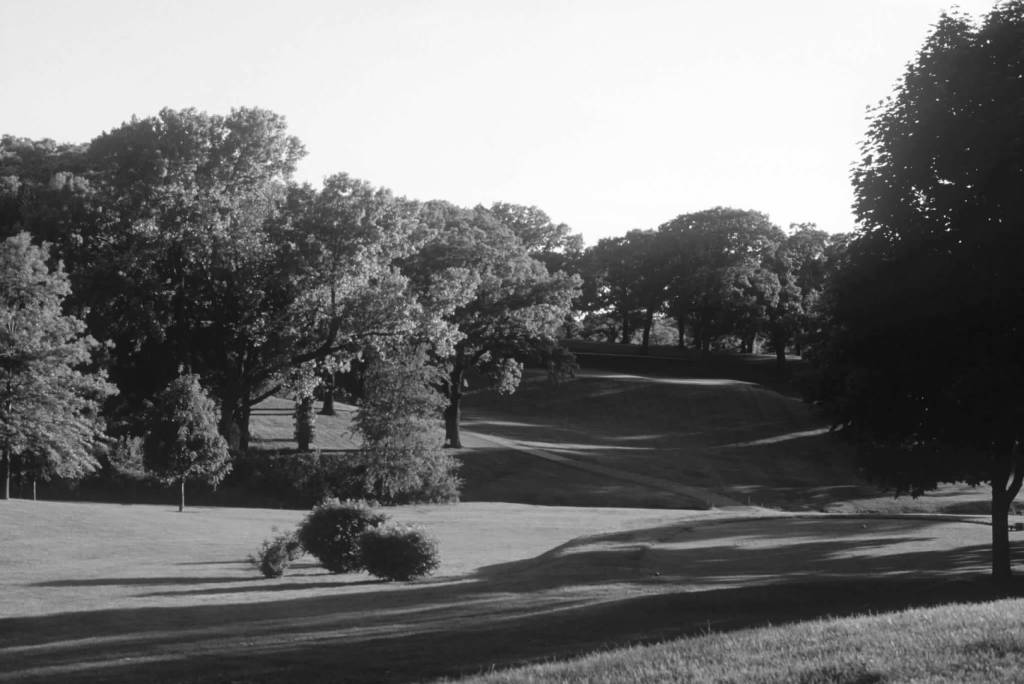
We also visited Ozaukee and Spring Valley in southern Wisconsin. Marquette and Clovernook were studied too. (MC: Although L&M are often considered Masters of the Midwest they did some excellent work much further south. The Country Club in Morristown Tennessee is very solid) The layout for the Eglin Air Force Base in Florida’s Panhandle is definitely worth a special trip!

After all this travel we then tried to figure out the exact period/stage they were in architecturally during the building of Wakonda (1921-1922). For example, what exactly they were building at this specific moment in their career? We ultimately discovered that the construction of four Langford golf courses- Ozaukee, Innsbrook, Minnehaha and Ridgemoor were contemporaneous with Wakonda. Thus, we went back and carefully studied these four properties and tried to make connections. Ozaukee in Mequon, Wisconsin was particularly inspiring. It took me until my fourth or fifth visit to figure out that Wakonda and Ozaukee were identical in many fundamental design categories. But neither of these two fine courses had the drama or the sophistication that is so pronounced at Lawsonia (1930). In sum these two were works in progress moving towards full scale where you could see Bill Langford tinkering and dabbling with what would ultimately evolve into his imaginative and Bold style. Almost if he were teaching his construction crews while learning and refining his own remarkable style. A very interesting evolution inching closer and closer to his creative peak.
One more thing in conclusion. We used the original Langford master plan, historic aerials, the 1939 NCAA tournament photos and old newspaper articles. We used these essential documents to arrive at our final vision for Wakonda and its lovely property. As of late September 2023, it was all complete!

Wakonda’s Newly Restored 13th
MC. Tyler, thank you for such thoughtful answers about your fascinating professional journey. I look forward to checking in with you later this year. Meanwhile enjoy the course openings at Spy Ring on Long Island and Wakonda. Sincere congratulations on your upcoming eighteen-hole project near Charleston, South Carolina.
Upcoming: Matt Frey, PGA
Pennsylvania photos by Joe Bausch
Wakonda 2023 photos courtesy of The Fried Egg
Upcoming guests: Matt Frey PGA, Ian Andrew

 Devereux Emmet Golf